If you’re looking at pond plants of Eugene, the good news is there are a lot of solid options. The key is choosing plants that actually fit your pond. Sun exposure, water depth, fish activity, and how much upkeep you want all make a difference.
The right plants do more than just make a pond look nice. They can soften the edges, provide shade, give fish cover, and help the whole feature feel more natural and settled into the landscape.
Our 10 Favorite Pond Plants for Eugene Ponds
These are not the only good choices, but they’re some of the ones that tend to do well here when the conditions are right.
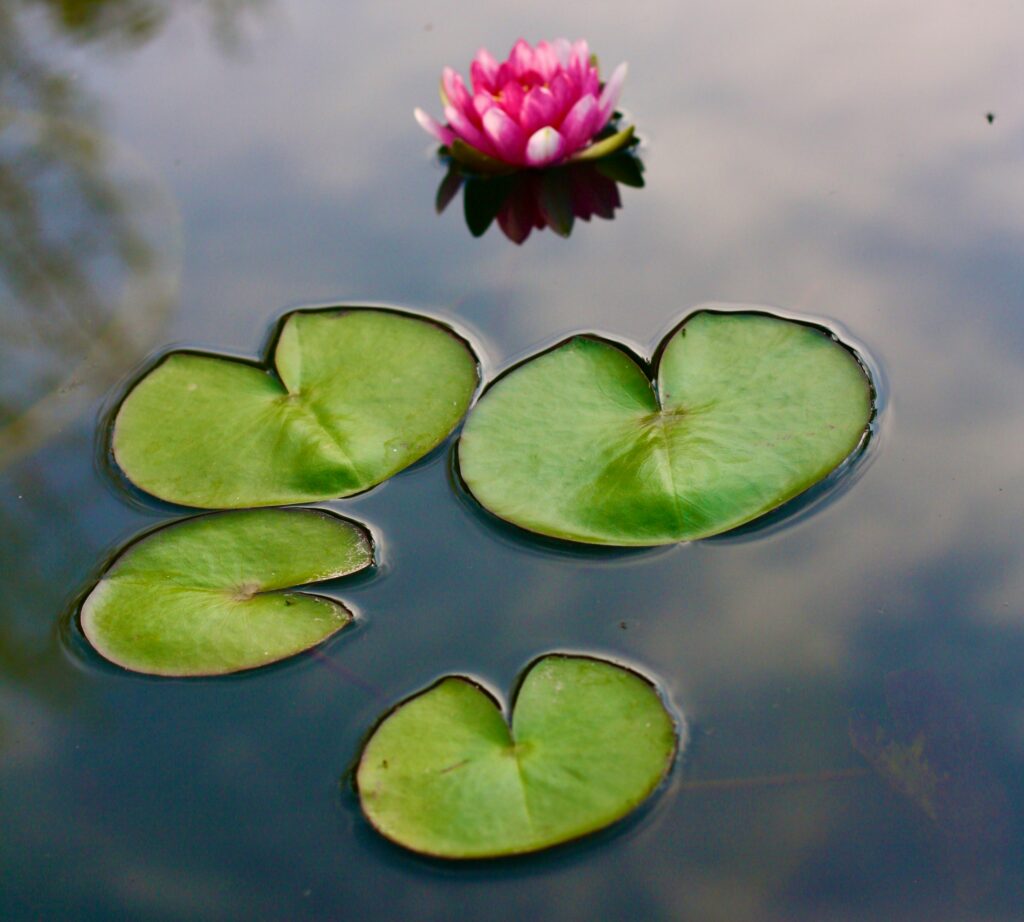
- Water lilies – a classic choice for ponds with full sun and calm water. Great for shade, color, and cooling the water a bit.
- Marginal iris – a strong option for pond edges or planting shelves where the roots can stay submerged in shallow water. Unlike regular garden iris, these are meant for wet pond conditions.
- Pickerel rush – does well in shallow water with good sun and adds height without looking too stiff.
- Sweet flag – a nice choice for shallow edges and boggy spots, especially if you want something softer and more natural-looking.
- Horsetail rush – great for a strong vertical look in wet soil or shallow water, but best kept contained because it likes to spread.
- Water hawthorn – a good fit if you want something that handles cooler conditions well and adds interest outside peak summer.
- Dwarf cattails – best for larger ponds or natural-style water features where they have room to breathe.
- Corkscrew rush – a fun one for texture, especially around pond edges or shallow wet spots. Oregon Aquatics describes it as ideal for bog edges or standing water up to about 4 inches deep.
- Water forget-me-not – a great choice for softening the edge of the pond with low growth and small blue flowers in season.
- Water celery – a really useful plant for pond edges, streams, and waterfalls, especially if you want something that spreads into a softer, more natural look. Oregon Aquatics notes that it’s a quick grower and works well alongside pond edges or streams.
A Few Things to Think About Before Planting
- Before adding plants, it helps to ask a few simple questions:
- How much sun does the pond get?
- How deep is the planting area?
- Are there fish in the pond?
- Do you want a more natural look or something a little cleaner and more structured?
- How much upkeep do you actually want?
Some plants stay tidy. Some spread fast. Some hold up better around fish than others. That’s why it usually works better to think about what fits your pond instead of just grabbing whatever looks best at the nursery.
Plants Help a Lot — But They Don’t Fix a Pond on Their Own
Plants can absolutely improve the look and feel of a pond, but they are not a cure-all. If the pond has cloudy water, heavy sludge, poor circulation, or fast algae growth, adding a few new plants usually is not going to solve the bigger problem.
In those cases, it often makes more sense to start with the basics:
Once the pond is healthier overall, plants tend to do better too.
A Good Rule of Thumb
If you’re not sure where to start, start simple.
A few well-chosen plants usually look and work better than trying to add too many at once. A water lily, a couple of strong marginal plants, and something with a little height at the edge can go a long way. You can always add more later once you see how the pond responds.
Fisher Final Thoughts
The best pond plants of Eugene are the ones that fit your pond, your light, and the way you want the feature to feel. Some ponds look best with just a few well-placed plants. Others do well with a fuller, more layered look. Either way, the goal is the same: plants should support the pond, not make it harder to manage.
When the right plants are paired with healthy water, good circulation, and regular upkeep, they can make a big difference in how a pond looks and feels.